Mass flow or volume flow?
Mass flow and volume flow can be converted into each other via the density of the gas. A device that measures mass flow can therefore just as well output volume flow, and vice versa. Many mass flow meters state the flow as standard volume flow, i.e. referred to defined standard conditions (pressure, temperature, humidity) and thus to a fixed standard density.
Only a few measuring principles actually capture mass flow. The best known are Coriolis sensors and thermal mass flow sensors.
Coriolis sensors
Coriolis sensors usually determine mass flow directly in oscillating measuring tubes. They are very stable and generally also suitable for high pressures and aggressive media. Their complex design, however, makes them expensive.
Their greatest drawback: the medium must have a significant density. With gases, Coriolis sensors can therefore only be used at elevated pressures. In practice, there is usually also a considerable pressure loss. For measurements at atmospheric pressure with a low pressure drop, they are hardly an option.
Thermal mass flow sensors
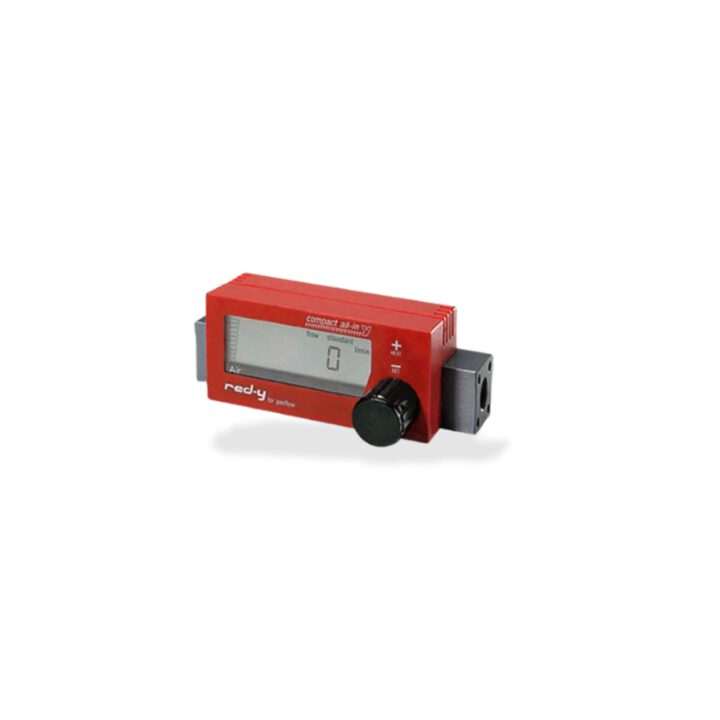
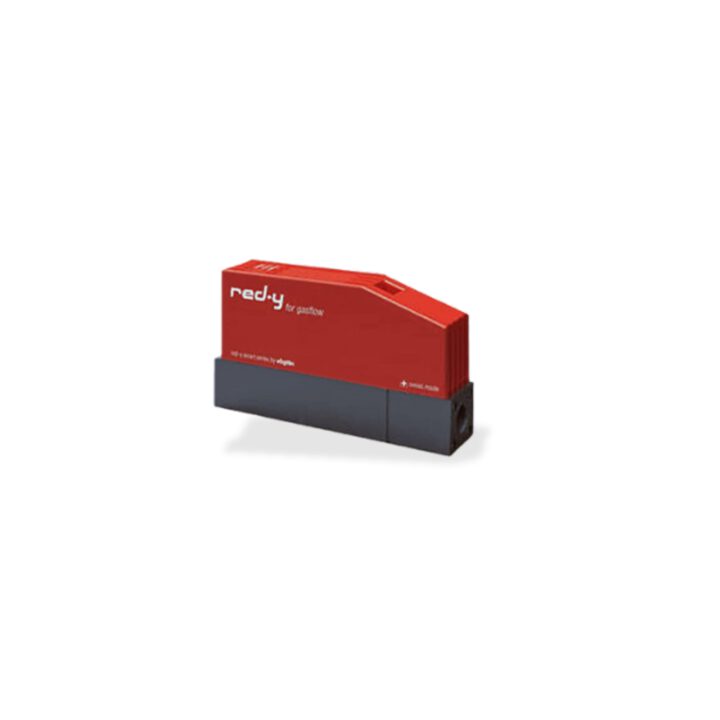
Thermal mass flow sensors measure the heat transfer from heated components into the flowing gas and can therefore be built at comparatively low cost. The principle comes with limitations:
- Settling behaviour: The sensors usually respond very quickly to changes in mass flow. Owing to thermal inertia, however, it often takes relatively long until the signal has settled stably at the new flow rate.
- Zero point: The principle requires a flow; there is no stable zero point without flow. Most devices therefore apply a low-flow cut-off below a few percent of the measuring range. A zero adjustment is not possible.
- Long-term stability: The heat transfer is highly sensitive to contamination and deposits. Even with clean, filtered atmospheric air this is noticeable and considerably reduces long-term stability. For higher demands, thermal sensors are therefore usually only suitable for high-purity gases.
- Flow direction and flow profile: Depending on the design, thermal sensors cannot detect the flow direction. Often they measure at a single point in the pipe only, which requires a fully developed, undisturbed flow profile.
Alternative: differential pressure methods
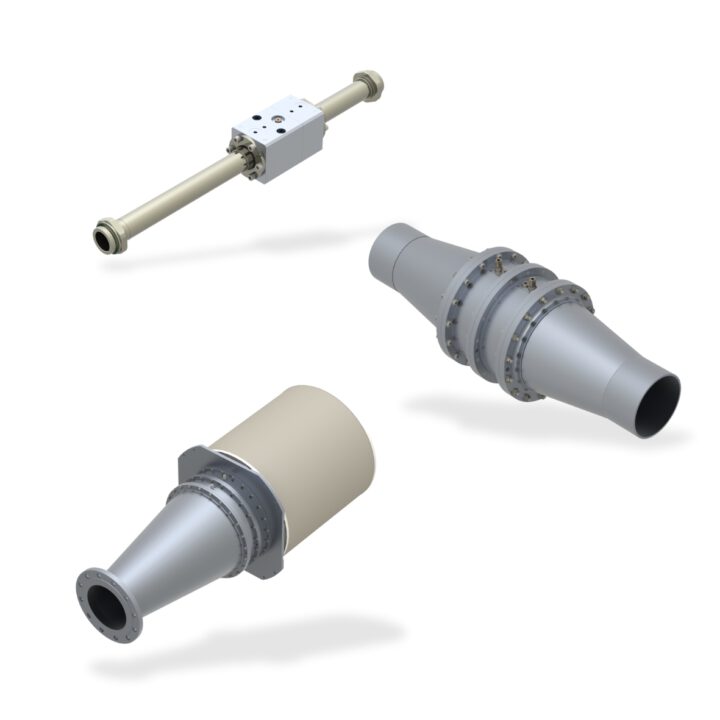
Besides differential pressure flow elements, the differential pressure methods include laminar flow elements. A differential pressure sensor measures the usually very small pressure drop across the element. The main advantages:
- detection of the flow direction (bipolar operation)
- stable zero point: without flow the differential pressure is zero, so the zero point can be adjusted
- very fast response and settling
- excellent long-term stability
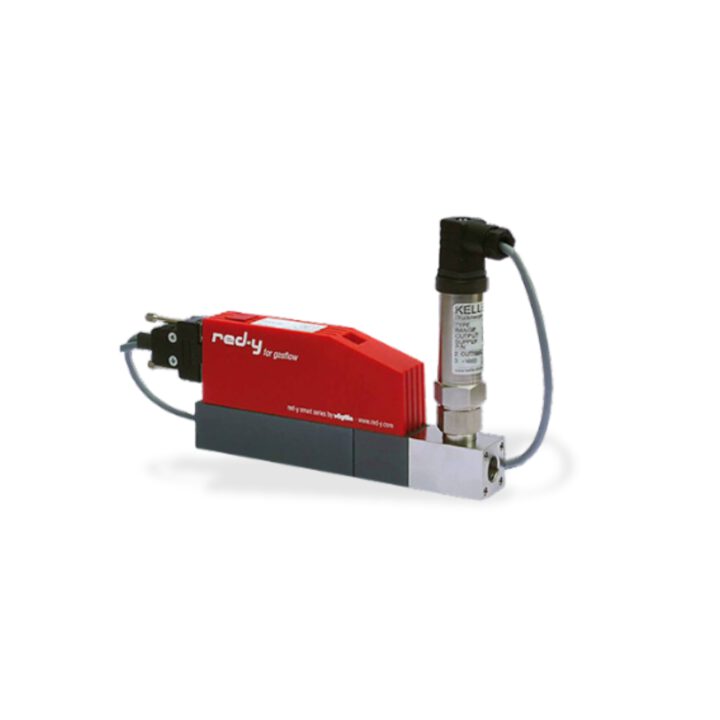
Where these requirements are not paramount, the thermal mass flow meters and controllers presented above are a comparatively low-cost choice.